AIARG 14th Conference - Ethical Challenges in Architecture
Building Change (BC) Community of Practice (CoP)
March 13th, 2025
 HCI 3 Building Change Initiative
Contemporary challenges facing our built environment require a new approach:
- Climate change
- Resource depletion
- Housing crises
- Social inequity
Our proposal: An Assembly-Based Framework that transitions from atomistic perspectives to a holistic, integrated view of architecture
HCI 3 Building Change Initiative
—Shelley McNamara and Yvonne Farrell, Grafton Architects
Expanding architectural ethics to recognize our responsibility to:
- Future generations
- Non-human species
- Geological systems
- Cultural heritage
HCI 3 Building Change Initiative
Origins
- Democritus and Leucippus (5th century BCE)
- Reductionist worldview
- Breaking complex systems into components
Architectural Implications
- Environmental impacts externalized
- Social consequences ignored
- Cultural contexts separated
- Short-term horizons prioritized
—Isabelle Stengers
"What is Life?" (1944) - Public lectures delivered at Trinity College
Key insight: "Why must our bodies be so large compared with the atom?"
- Our perception depends on existing at scales where patterns emerge from atomic chaos
- This insight is fundamental to our multi-scale approach to architecture
- Bridges atomic, human, ecological, and planetary scales
- aperiodic crystal, molecular structure that carries genetic information (chromosomes) VS periodic crystals typically studied in physics
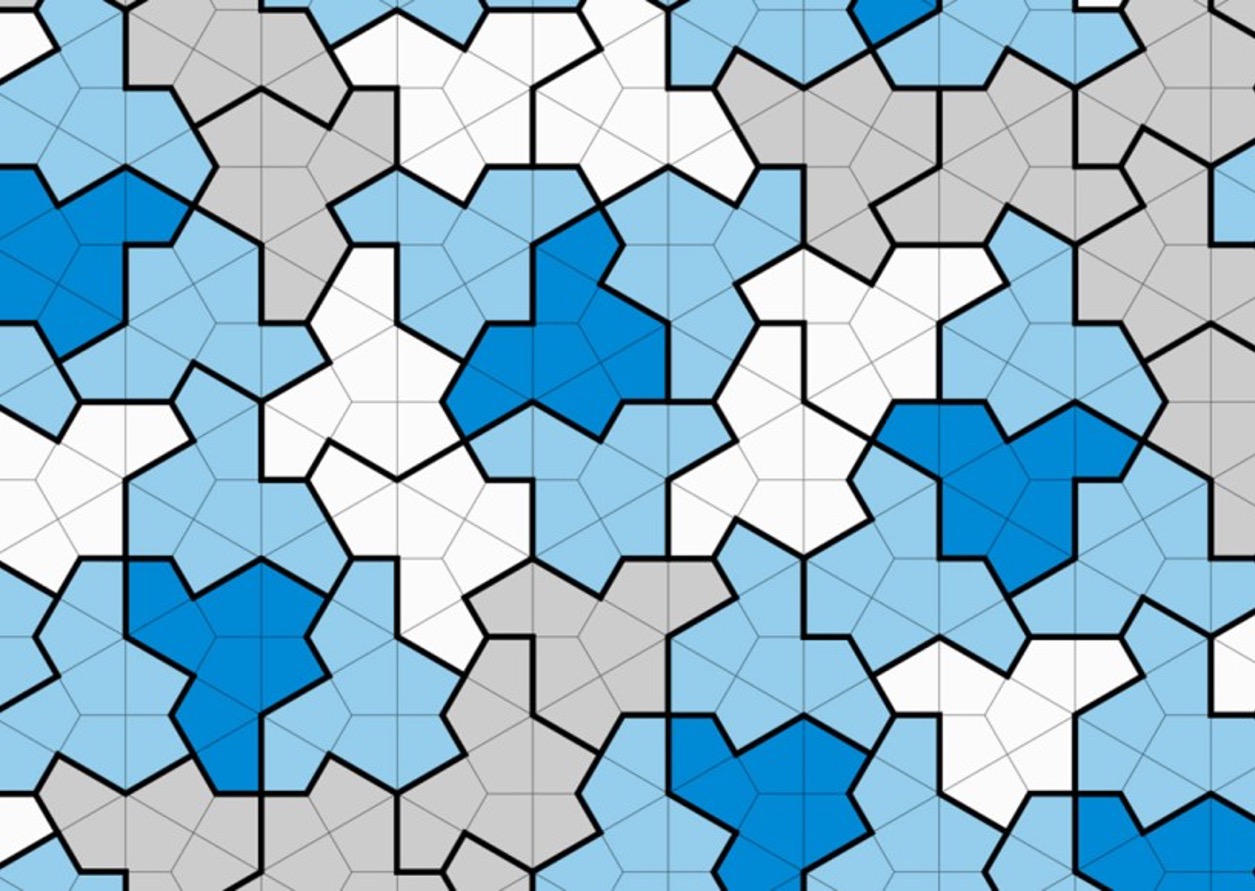 D. SMITH, J.S. MYERS, C.S. KAPLAN AND C. GOODMAN-STRAUSS
 (CC BY 4.0)
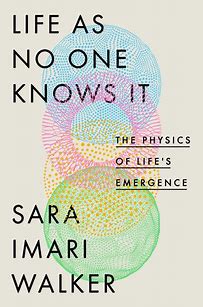
"Life as no one knows it" (2022)
Assembly Index: "The minimal history of physically possible, recursive operations that must occur for an object to appear"
Critical threshold at 15 assembly steps:
- Below 15 steps: Abiotic processes
- Above 15 steps: Exclusively produced by living systems
- Measurable using molecular spectrometry
Concept
EMERGY: Total energy (direct, indirect, and "work of nature") used in making a product
—Erwin Schrödinger
Architectural Ethics
- Comprehensive accounting
- System boundary expansion
- Quality differentiation
- Deep time awareness
Solar energy → Ecological processes → Materials → Building → Lifecycle → Decomposition
"The Science of Can and Can't" (2021)
Ask: "What tasks are possible, what transformations could happen, and why"
The "farmer game" analogy: Creating conditions that make growth possible
- Heritage as possibility space, not static preservation
- Public space as constructor for diverse interactions
- Adaptive reuse as ethical imperative
"The Beginning of Infinity" (2011)
Problems are soluble through the creation of new knowledge
Decimal Thinking
- Incremental improvements
- Optimizing existing approaches
- Staying within paradigms
Order of Magnitude Thinking
- Fundamental paradigm shifts
- Creating new possibilities
- Reimagining systems
Deutsch critiques Buckminster Fuller's "Spaceship Earth" metaphor
Spaceship Earth Problems
- Implies finite resources
- Suggests central control
- Focuses on resource management
Assembly-Based Alternative
- Knowledge allows resource transformation
- Distributed intelligence
- Focus on possibility, not limitation
Incorporating all species as co-creators, not just passengers
—Sara Walker
Buildings as participants in evolutionary processes:
- Designing for biodiversity
- Recognizing multi-species communities
- Considering evolutionary impacts
- Supporting ecosystem services
Newtonian Approach
- Static measurements
- Discrete components
- Limited temporal scope
Lagrangian Approach
- Tracking through time
- Historical pathways
- Extended temporal scope
Extending Stewart Brand's shearing layers model to include ecology:
- Site: Geographical setting, geology, hydrology
- Structure: Foundation, load-bearing elements (50-100 years)
- Skin: Exterior surfaces, envelope (20-30 years)
- Services: HVAC, electrical, plumbing (7-15 years)
- Space Plan: Interior layout, walls, floors (3-7 years)
- Stuff: Furniture, appliances (months to years)
- + Ecosystems: Microbiomes, plant communities, animal habitats
- + Bioregion: Watershed, climate, biodiversity networks
—David Tilman
Climate action through architecture requires:
- Mitigation: Reducing emissions
- Adaptation: Creating resilience
- Carbon sequestration: Removing carbon
- Just transition: Ensuring equity
Assembly-Based Framework reframes housing as:
- A fundamental human right
- An ecological intervention
- Part of complex lineages
- A system capable of transformation
Balancing multiple ethical obligations:
- Right to adequate housing
- Environmental impact
- Cultural appropriateness
- Economic accessibility
Beyond technical compliance to fundamental principles of dignity and inclusion:
Key Principles
- Inclusive entry points
- Adaptable spaces
- Perceptual diversity
- Intergenerational equity
From Traditional to Assembly-Based
- From compliance checklist to design philosophy
- From designing for to designing with
- From exception to integration
- From static to adaptive
Universal Design should be understood as a political and ethical practice that challenges normative assumptions embedded in architectural thinking.
Traditional Approach
- Static preservation
- Original state as ideal
- Past-oriented
- Expert-driven
Assembly-Based Approach
- Ongoing lineage
- Multiple potential futures
- Past-present-future integration
- Community-engaged
Constructor theory helps us understand heritage in terms of what transformations are possible while maintaining cultural significance
—Rodney Harrison
Virtual Space Qualities
- Teleporting
- Overlap
- Synchronous/asynchronous connections
- Accessibility across distance
Integration Challenges
- Maintaining embodied experience
- Preserving sense of progression
- Creating meaningful place
- Ensuring ethical interactions
Assembly-Based approach integrates physical and digital realms by:
- Leveraging strengths of both domains
- Maintaining integrity of embodied experiences
- Revealing underlying systems that would remain obscured
- Enhancing adaptability of designs
Transforming architectural education requires:
- Transdisciplinary curriculum
- Systems thinking skills
- Deep time awareness
- Computational modeling
- Ethical reasoning
- Cultural sensitivity
- Practical application
Integration of technical, ecological, social, and ethical knowledge in architectural design
The first year of architectural education represents a critical period of exploration:
- Systems thinking
- Fine arts
- Design (graphic and 3D)
- Academic literacy
- Climate studies
- Information and communication technology
- Ecology
- Environmental and building physics
Students discover their unique interests, strengths, and potential areas of contribution through diverse foundational experiences
—Celadyn \& Celadyn
The first year serves as a platform for students to:
- Discover what excites and motivates them
- Explore different perspectives
- Experiment with various approaches to problem-solving
- Identify areas of interest and strength
As students progress, they follow pathways that align with their:
- Design innovation interests
- Environmental stewardship values
- Technological integration skills
- Social impact goals
The diversity of experiences and perspectives cultivated during the first year lays the groundwork for:
- Collaboration across disciplines
- Innovation through diverse perspectives
- Problem-solving through complementary skills
- Mutual respect and shared learning
Particularly important for addressing complex challenges:
- Climate change
- Housing crises
- Social inequity
- Biodiversity loss
A supportive educational environment encourages risk-taking and builds the resilience needed for professional practice
Jay Randle's pedagogical approach builds "discriminatory skills" through sequential stages:
- Texture analysis: Understanding surface character through tactile engagement
- Light as form-revealer: Exploring how light presents form to vision
- Form analysis: Developing rigorous analytical frameworks
- Representational translation: Creating drawings as "instructions"
—Jay Randle
Analysis of compound curvature creates "assembly literacy"—the ability to perceive how complex forms emerge from simpler components:
- Drapery: No compound curvature
- Hand (palm): Some compound curvature
- Bell pepper: Pronounced compound curvature
This approach is valuable for implementing the Assembly-Based Framework because it:
- Develops direct experiential understanding of assembly principles
- Creates tangible connections between physical experience and abstract representation
- Builds analytical frameworks for understanding form as process rather than object
- Cultivates multi-scale awareness
Workshop series on carbon bonds and Platonic solids exploring fundamental principles:
- Abundance: Carbon's availability
- Complexity: Carbon's four bonds enable intricate structures
- Stability: Carbon bonds create durable configurations
- Scale: From molecular to structural scales
The pedagogical approach embodies key aspects of the Assembly-Based Framework:
- Multi-scale understanding: Experiencing Schrödinger's insights about scale
- Assembly pathways: Understanding relationship between rules and forms
- Tensegrity principles: Self-organizing stable systems
- Material intelligence: Simple connections creating complex structures
Creates a "learning circle" environment where:
- Traditional hierarchies dissolve
- Knowledge emerges through collaborative exploration
- Interdisciplinary thinking is modeled
Types of relationships within our Assembly-Based Framework:
- One-way: Dependency relationships (e.g., Atomic → Building)
- Two-way: Symmetrical interactions (e.g., Urban ↔ Planetary)
- Weighted: Varying importance connections
- Emergent: Cross-scale patterns
Leads to emergent phenomena:
- Clustered knowledge domains
- Cross-scale integration patterns
- Evolving dependency relationships
- Communities of Practice formation
Assembly-Based Framework transforms architectural practice by emphasizing:
- Lifecycle Stewardship: From conception through decommissioning
- Adaptive Evolution: Over static models
- Extended Responsibility: "Earth as our client"
IFTTT research innovation workflow:
- Knowledge: Is this the best practice of common and corroborated knowledge?
- Uses: If yes, share/deliver/disseminate. If not, research/innovate.
- Roles: How do different stakeholders contribute?
- Skill-sets: What competencies are needed?
—Jeremy Till
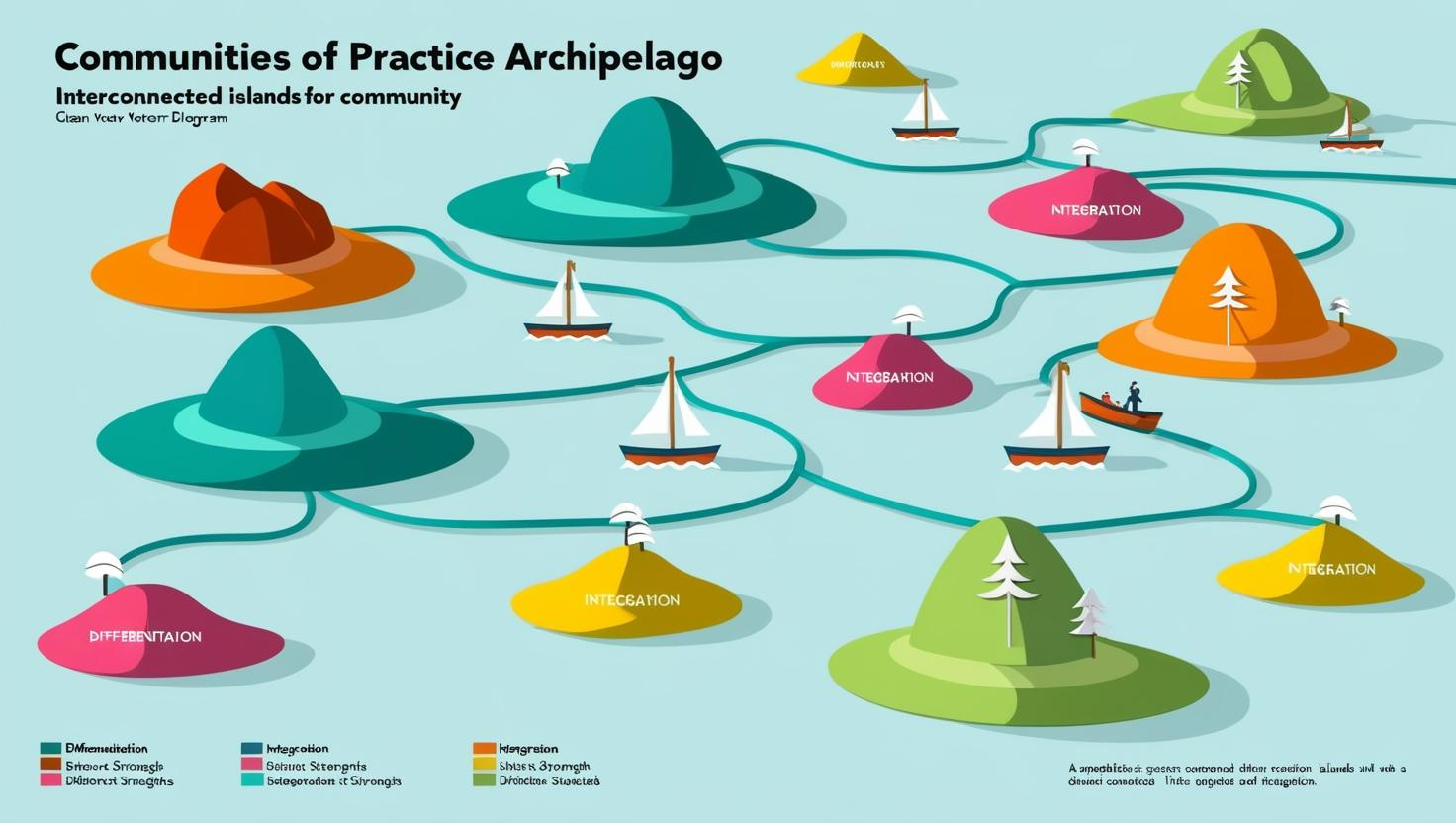
Sustaining change through collaborative networks:
- Archipelago of knowledge islands with connecting pathways
- Transdisciplinary collaboration across all six schools
- Shared resources and learning platforms
- Integration of research, education, and practice
Islands in our archipelago:
- Universal Design
- Regenerative Systems
- Multi-species Design
- Climate Adaptation
- Heritage Lineage
- Housing Justice
The best thing about Building Change is how it brought us all together, forming seeds for a whole new shared knowledge creation
The Assembly-Based Framework offers:
- A paradigm shift from reductionist to assembly-based thinking
- Integration of scientific understanding with ethical reasoning
- Practical methodologies for addressing contemporary challenges
- Educational approaches that prepare future architects for expanded responsibilities
Meeting the challenges of our built environment—climate change, resource depletion, housing crises, social inequity—demands nothing less than fundamental rethinking of:
- What architecture is
- What architecture does
- Who architecture serves
—David Deutsch
Key questions for our community:
- What are the challenges we face in implementing resilient design in architecture education?
- How can we effectively incorporate resilient design principles into the curriculum?
- What support structures are necessary for fostering resilient design in architectural education?
- How do we sustain and mainstream what we have achieved?
- What are the policy \& practice messages for architectural education support \& regulation?
From Building Change (BC) to a special All Island Academy of Excellence in Architecture for humanity and all its inhabitants, human and otherwise
Building Change (BC) Community of Practice (CoP)
This work is released under a Creative Commons Attribution-ShareAlike 4.0 International License